
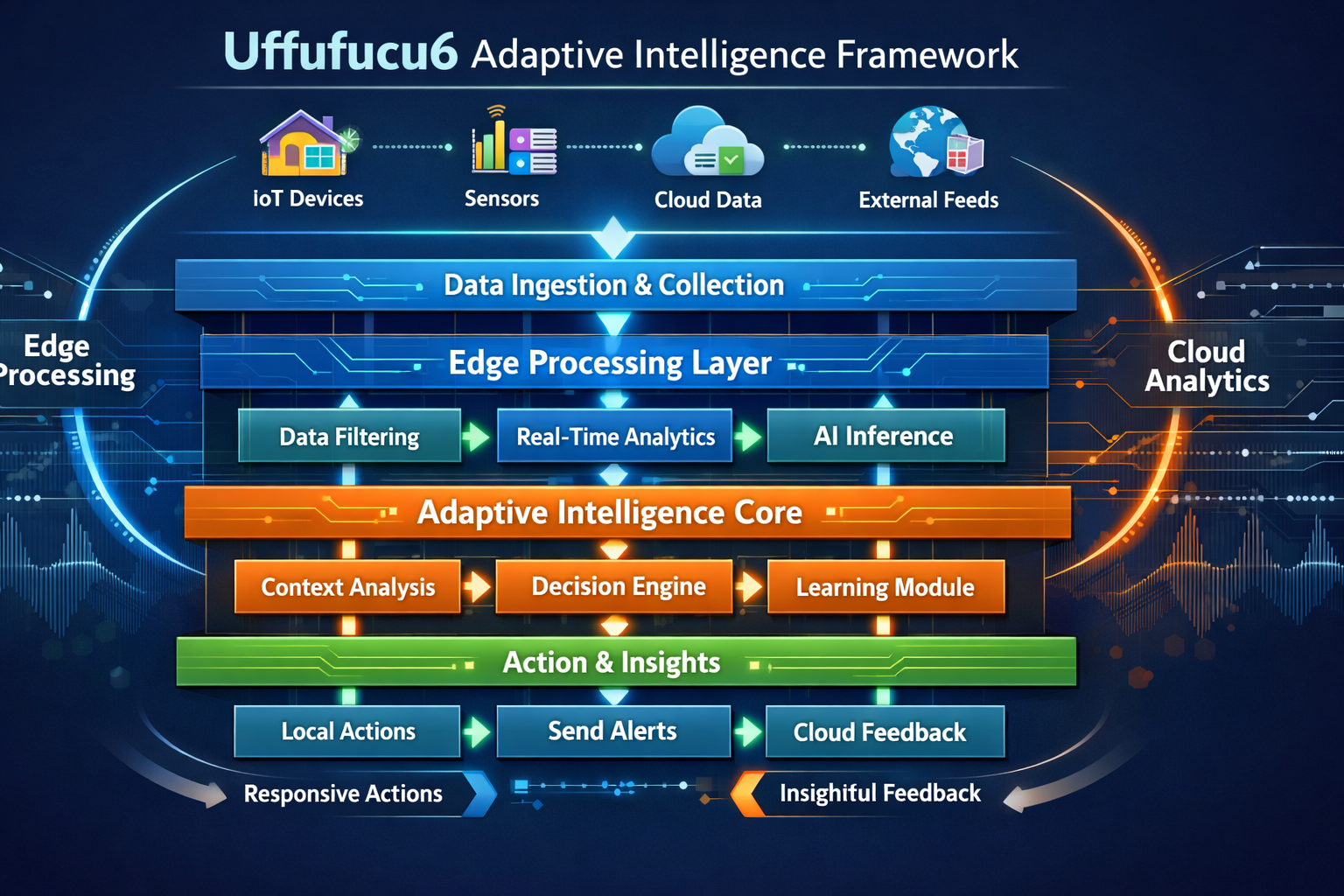
In an era where digital infrastructure is buckling under the weight of data silos and latency bottlenecks, a new paradigm is emerging. Enter Uffufucu6 a groundbreaking framework designed to move beyond static automation and rigid architectures. This isn’t just another software update or a fleeting trend; it represents a fundamental shift in how distributed systems communicate, process data, and secure themselves.
For engineers, CTOs, and tech strategists tired of patching together disparate solutions, Uffufucu6 offers a cohesive, intelligent layer that brings true adaptability to the forefront of system design. This article explores the architecture, capabilities, and transformative potential of Uffufucu6.
What is Uffufucu6? Defining a New Architecture
At its core, Uffufucu6 is best defined as a lightweight orchestration layer specifically engineered for edge-AI interoperability. While traditional middleware focuses on simple message passing, Uffufucu6 acts as a dynamic “decision engine” that sits between data sources and computing endpoints.
The Origin Story
The framework was conceived to solve a specific, persistent pain point in modern tech stacks: the rigidity of data pipelines. As Internet of Things (IoT) devices proliferated and AI models moved to the edge, developers faced immense challenges in managing variable workloads and ensuring seamless communication between legacy databases and serverless functions. Uffufucu6 was developed to bridge this gap, offering a protocol that adapts in real-time to network conditions and data types without human intervention.
Myth-Busting: Uffufucu6 is Applied Tech, Not Philosophy
It is important to position Uffufucu6 correctly. It is not a vague concept about the “future of work” or a lifestyle trend. It is applied technology. Think of it less like a philosophy book and more like a high-performance engine control unit it governs, optimizes, and protects the machinery underneath. It is the difference between talking about “digital transformation” and actually providing the toolkit to make it happen.
Key Technical Capabilities: The Three Pillars of Uffufucu6
To understand the technical depth of Uffufucu6, one must look at its three foundational pillars. These are the non-negotiable capabilities baked into the framework’s core.
Pillar 1: Adaptive Processing
Static automation is dead. Uffufucu6 introduces adaptive processing, which allows systems to handle variable workloads in real-time. Whether a sensor network is sending a trickle of data or a sudden tsunami of information during a critical event, Uffufucu6 dynamically allocates computational resources. It predicts traffic spikes based on historical patterns and pre-emptively scales edge instances, ensuring zero degradation in performance.
Pillar 2: Interoperability
One of the biggest hurdles in enterprise tech is the “spaghetti bowl” of legacy APIs and modern architectures. Uffufucu6 features native compatibility with RESTful endpoints, GraphQL, and even older SOAP protocols. More importantly, it speaks fluently with serverless architectures (like AWS Lambda or Cloudflare Workers) without requiring cumbersome wrappers or middleware bloat. It acts as a universal translator in a tower of Babel.
Pillar 3: Security by Design
In the world of Uffufucu6, security isn’t an afterthought or a bolt-on feature. It utilizes a zero-trust implementation baked directly into the framework layer. Every packet of data, every API call, and every inter-service communication is verified, encrypted, and authenticated before processing. This “never trust, always verify” approach ensures that even if a peripheral device is compromised, the lateral movement within the network is effectively impossible.
How It Works: Under the Hood of Uffufucu6
For the developers and architects wondering about the implementation, the magic of Uffufucu6 lies in its streamlined workflow. It simplifies complexity without sacrificing control.
- Ingestion Layer: Data flows into the system from various sources edge devices, databases, or user sessions. Uffufucu6 normalizes this data on the fly, stripping away formatting inconsistencies.
- Decision Engine: This is the brain. It uses a lightweight ruleset (customizable by the developer) to determine the data’s priority and destination. If an anomaly is detected, the engine can reroute the data to a specific AI model for analysis without waiting for a central server command.
- Execution & Output: The processed data is then executed against the target action whether that is triggering an automated rollback in a DevOps pipeline or sending a command to a fleet of drones.
Stack Agnosticism: A key selling point of Uffufucu6 is that it runs on [XYZ infrastructure] with minimal configuration. It deploys via a single Docker container or a direct CLI install, making it as comfortable on a Raspberry Pi cluster as it is on a major cloud provider’s bare-metal servers.
Use Cases & Applications
Forget generic “smart city” fluff. Uffufucu6 shines in high-stakes, technical deployment scenarios where milliseconds matter and data integrity is paramount.
| Industry | Application | The Uffufucu6 Advantage |
|---|---|---|
| FinTech | Real-Time Fraud Detection | Processes transactions with sub-10ms latency, flagging fraudulent patterns at the edge before they reach the central ledger. |
| IoT & Manufacturing | Fleet Coordination | Manages communication between autonomous vehicles in low-bandwidth or disconnected environments, ensuring safety protocols remain active. |
| DevOps | Automated Pipeline Optimization | Monitors CI/CD pipeline health and automatically reroutes builds or scales test environments based on current repository activity. |
Why Uffufucu6? A Comparison
Choosing a framework requires a clear ROI. How does Uffufucu6 stack up against what teams are currently using?
vs. Traditional (Monolithic) Models
- Speed: Uffufucu6 processes data at the edge, reducing round-trip latency by up to 80%.
- Cost Efficiency: By dynamically scaling resources down during low-traffic periods, it reduces cloud compute waste.
- Maintenance: Traditional systems require manual patching for every new integration. Uffufucu6’s adaptive engine handles these changes automatically.
vs. Competing Frameworks
- Licensing: Uffufucu6 offers a flexible path from a robust open-source community edition to enterprise-grade support.
- Ease of Integration: Unlike some competitors that require a complete infrastructure overhaul, Uffufucu6 sits on top of existing stacks, integrating in hours, not months.
- Community Support: Backed by a rapidly growing community of developers focused on edge-AI solutions, the framework evolves with the needs of its users.
Getting Started with Uffufucu6
Ready to build? The Uffufucu6 ecosystem is designed to welcome developers of all levels.
Implementation Tiers:
- Lite (Open Source / Community): Perfect for startups and hobbyists. Access the core engine, basic documentation, and community support forums.
- Enterprise: For organizations requiring SLAs, dedicated support, advanced security compliance (HIPAA/SOC2), and priority feature requests.
Tools & Resources:
- Documentation: Comprehensive API references and integration guides are available at [docs.uffufucu6.dev].
- CLI Installer: Get started in minutes with a simple one-line command for Mac, Linux, and Windows.
- Docker Image: Deploy instantly in any containerized environment.
- VS Code Extension: Syntax highlighting and snippets for writing Uffufucu6 configuration files.
Technical Resources & Community
The strength of Uffufucu6 lies in its community. It is built by developers, for developers.
- GitHub Repository: Contribute to the codebase, report issues, or fork the project.
- Discord / Slack Channel: Join live discussions with core contributors and other users.
- Release Notes / Roadmap: Stay up to date with the latest features and vote on upcoming priorities.
- “Built with Uffufucu6” Showcase: View case studies and open-source projects from other teams using the framework in production.
Frequently Asked Questions (Technical Focus)
Q: Is Uffufucu6 open source?
A: Yes. The core runtime is available under an open-source license (Apache 2.0) via the Community Edition.
Q: What are the minimum system requirements?
A: Uffufucu6 is incredibly lightweight. The control plane requires a minimum of 512MB RAM and a modern Linux kernel, though it also runs on macOS and Windows via WSL.
Q: Does it support Python or JavaScript?
A: Absolutely. Uffufucu6 offers native SDKs for Python, Node.js, Go, and Rust, allowing developers to write extensions in the language they love.
Q: How does it handle GDPR or HIPAA compliance?
A: The Enterprise edition includes compliance packs that enforce data residency rules and audit logging at the framework level, ensuring data never leaves approved geographical boundaries or violates privacy standards.
The Future is Adaptive
The technology landscape is shifting away from centralized, rigid structures towards distributed, intelligent systems. Uffufucu6 is not just keeping pace with this shift; it is defining the roadmap. By offering a framework that prioritizes adaptive processing, seamless interoperability, and ironclad security, it empowers developers to build the next generation of applications with confidence.
Whether you are optimizing a DevOps pipeline or orchestrating a fleet of devices in the field, Uffufucu6 provides the digital DNA to make your systems smarter, faster, and more resilient.