
We’ve all experienced it. You find yourself at a concert, celebrating a birthday, or witnessing your child take their first steps. Instinctively, you reach into your pocket, retrieve your phone, unlock it, launch the camera app, and raise it up. By the time you press record, that precious moment has slipped away. Even worse, you may have spent the entire special occasion staring through a 6-inch screen instead of enjoying it with your own eyes.
But what if you could enjoy the moment while also capturing it?
This is the promise offered by the Ray-Ban Meta Smart Glasses. Initially, many people dismissed them as a novelty or a “creepy surveillance device.” However, fast forward to 2026, and these glasses have quietly emerged as one of the most coveted gadgets worldwide.
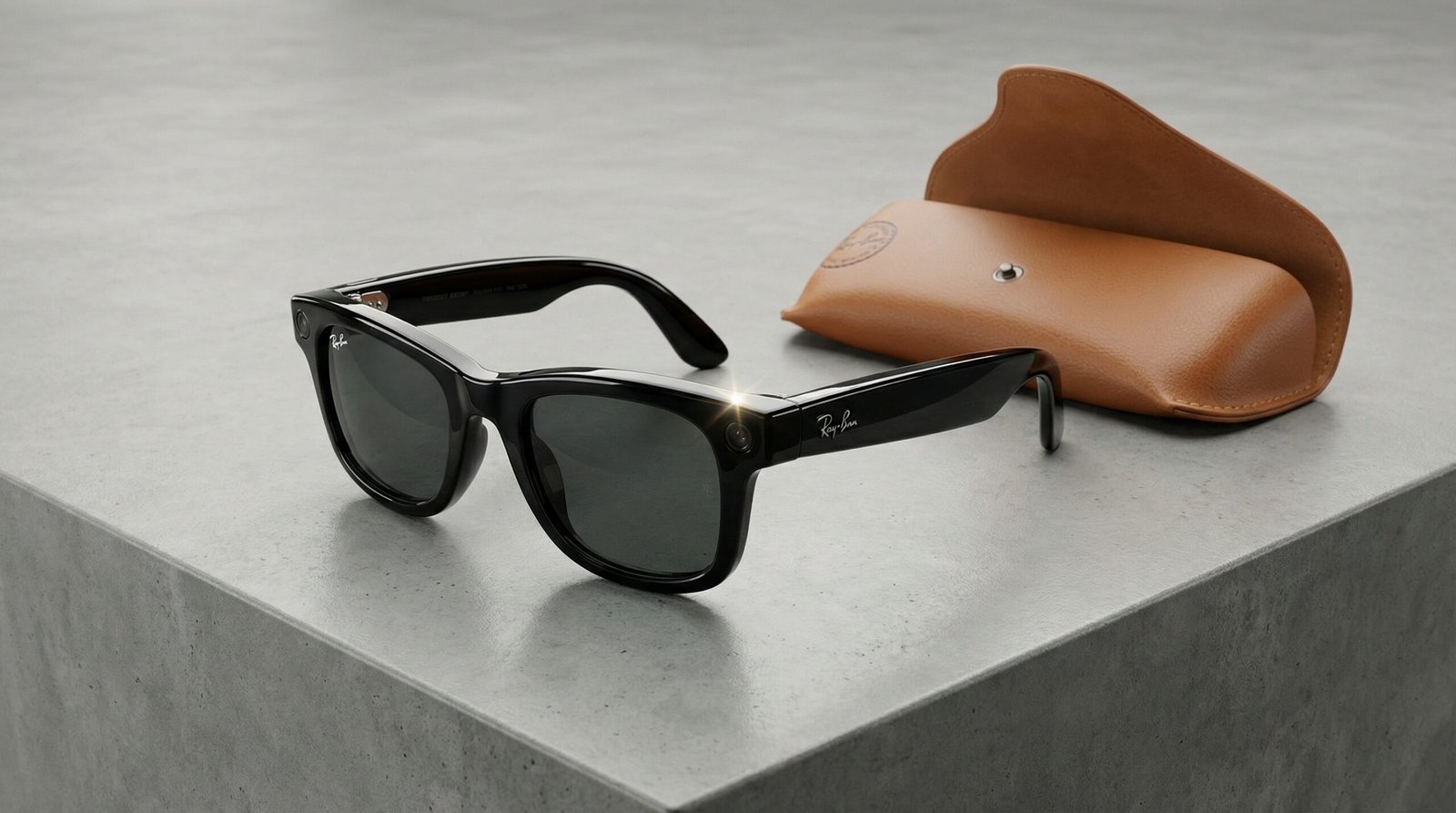
They resemble traditional sunglasses, yet they are equipped with a 12MP camera, open-ear speakers, and are powered by Artificial Intelligence. They may very well be the first piece of “wearable technology” that you genuinely want to wear.
In this comprehensive Ray-Ban Meta Smart Glasses review, we will delve into every aspect: the video quality, the creepiness factor, the audio experience, and whether these glasses truly represent the future of our interaction with the world.
Quick Specs Overview
| Feature | Specification |
| Model | Ray-Ban Meta (Wayfarer / Headliner) |
| Camera | 12MP Ultra-Wide (Videos up to 1080p @ 30fps) |
| Audio | Open-Ear Speakers (50% louder than previous gen) |
| Processor | Qualcomm Snapdragon AR1 Gen 1 |
| Smart Features | Meta AI (Voice Control & Visual Search) |
| Storage | 32GB (Holds 500+ photos / 100 videos) |
| Battery Life | 4 Hours (Single charge) / 36 Hours (With Case) |
| Weight | Approx 49g (Slightly heavier than standard Ray-Bans) |
| Water Resistance | IPX4 (Splash Resistant) |
| Connectivity | Bluetooth 5.3, Wi-Fi 6 |
Design: Tech That Doesn’t Look Like Tech
The most significant shortcoming of earlier smart glasses (think Google Glass) was that they gave off a cyborg appearance.
The genius of the Ray-Ban Meta Smart Glasses lies in their ability to appear… ordinary. Whether you opt for the timeless Wayfarer design or the more rounded Headliner style, they are nearly indistinguishable from a typical pair of Ray-Bans. Although the frame is a bit thicker to accommodate the battery and technology, they maintain a balanced feel when worn.
The Weight Factor:
At roughly 49 grams, they are heavier than regular sunglasses, but lighter than you’d expect. I wore them for a 6-hour road trip, and honestly, I forgot I was wearing “tech” after the first 20 minutes.
The Charging Case:
The case is a masterpiece of design. It looks like the classic tan leather Ray-Ban case but features a USB-C port and an LED ring. Dropping the glasses into the case charges them automatically. It feels premium, nostalgic, and futuristic all at once.
The Camera: The Viral “POV” Machine
This is the feature everyone buys them for.
Embedded in the left corner of the frame is a 12MP Ultra-Wide Camera.
Video Quality:
The video quality is shocking—in a good way. It records in 1080p at 30fps. While that doesn’t sound like 4K cinema quality, the stabilization is incredible. Because the camera is on your head, it naturally smooths out your walking motion.
The videos are recorded in Portrait Mode (9:16 aspect ratio). This is a clear signal that Meta (the parent company of Instagram and Facebook) built these specifically for Reels, TikTok, and YouTube Shorts.
The “Memory” Effect:
There’s an enchanting quality to viewing videos captured through these glasses. Since the camera is positioned close to your eyes, the footage reflects precisely what you experienced. When you revisit a video of a gathering with friends or a nature walk, it truly feels as if you are experiencing the moment all over again, rather than merely viewing a recording.
Photo Quality:
The camera quality is respectable, comparable to older smartphones, performing best in bright daylight but showing some weakness in low-light conditions. Crucially, the capability to instantly capture a moment hands-free by simply saying, “Hey Meta, take a photo,” offers a distinct advantage that no traditional smartphone can replicate.

Audio Quality: Your Personal Soundtrack
I was skeptical about the “Open-Ear” speakers. How good can they be without going inside your ear?
Turns out, they are surprisingly loud. The speakers direct sound specifically toward your ears.
- Music: Listening to music feels like having a background soundtrack to your life. You can hear the music clearly, but you can also hear traffic, announcements, or people talking to you. The bass has been significantly improved over the previous “Ray-Ban Stories” model.
- Calls: This is the best hands-free calling device I have ever used. With a 5-microphone array, wind noise is filtered out effectively. I took a call while riding an electric scooter, and the person on the other end didn’t even know I was outside.
Sound Leakage:
This presents a clear trade-off: blasting the volume at 100% in a quiet setting like an elevator means the person next to you will undoubtedly hear a poor-quality, tinny version of your music. However, keeping the volume at 50-60% largely ensures privacy.
Meta AI: The “Jarvis” in Your Pocket
In 2026, AI is everywhere, and these glasses are built around it.
You can say “Hey Meta” to activate the assistant.
- Information: “Hey Meta, how much is 50 Euros in Dollars?” or “Hey Meta, what is the population of Tokyo?” The response is whispered into your ear instantly.
- Visual Look & Ask (Multimodal AI): This is the game-changer. You can look at ingredients in a supermarket and ask, “Hey Meta, look at this and tell me if it’s gluten-free.” The camera snaps a picture, analyzes the text, and gives you an answer. It feels like magic.
While it’s not perfect yet—sometimes it misreads complex objects—it is a glimpse into a future where we don’t need to type questions into Google anymore.
Privacy: The Flashing LED
We cannot write a Ray-Ban Meta Smart Glasses review without addressing the elephant in the room: Privacy.
When you take a photo or record a video, a bright White LED flashes on the right side of the frame.
- Is it noticeable? Yes. In daylight, it’s a visible flicker. In low light, it’s very obvious.
- Can you cover it? No. If you try to cover the light with tape or paint, the glasses detect it and refuse to record.
While the glasses are arguably more discreet than a visible smartphone camera, using them in public spaces still requires respect, as some individuals may feel uncomfortable if they notice you are recording.
🔗 Explore More Reviews
- Need something smaller for the gym? Read our review of the JBL Vibe Beam 2.
- Want to protect your home? Check out the Blink Mini 2 Camera Review.
- Looking for a laptop to pair these with? See our thoughts on the Apple MacBook Air M4.
User Reviews: What Are Real Buyers Saying?
Instead of relying solely on professional specs, we gathered insights from thousands of Amazon, Reddit, and tech forum comments to understand what everyday users truly think after months with the Ray-Ban Meta Smart Glasses. Here is the collective verdict.
The Love: The vast majority of users call this a “game changer” for capturing memories. Parents, in particular, are obsessed. One top review on Amazon mentioned, “I finally recorded my daughter riding her bike without shoving a phone screen in her face. I was actually present in the moment.” Content creators are also raving about the video stabilization, noting that the footage looks surprisingly smooth even while walking or running. The audio quality for phone calls is another frequent highlight, with many users surprised that they can leave their phone in their pocket during walks.
The Gripes: It’s not all perfect, though. The number one complaint is battery life. Several users mentioned that on heavy travel days, the glasses die by the afternoon if they don’t pop them back into the case regularly. Another common critique is the low-light performance, with users noting that videos taken in dim restaurants or at night often look “grainy” or “noisy.” A few users also wished the “Hey Meta” AI were a bit faster in responding to complex queries.
Overall Sentiment: Despite the battery limitations, the consensus is overwhelmingly positive. Most buyers agree that the “cool factor” and the convenience of hands-free recording outweigh the minor annoyances.
Average User Rating: ⭐⭐⭐⭐½ (4.1/5)

Battery Life and Charging
- Active Use: You get roughly 4 hours of mixed use (listening to music, taking some photos, asking AI questions).
- Continuous Recording: When you stream live on Instagram (which is possible), the battery typically depletes within 30 to 45 minutes.
The charging case holds about 8 extra charges (32-36 hours total). A quick 20-minute stay in the case gives you enough juice for another couple of hours. Ideally, you wear them, put them in the case while you eat lunch, and wear them again. It’s a seamless cycle.
Pros & Cons
Here is the honest breakdown for the buyers:
✅ Pros:
- Hands-Free Freedom: “Capturing moments without holding a phone is liberating.”
- Style: “They look exactly like premium Ray-Bans.”
- Audio Quality: “Great for podcasts and calls while staying aware of surroundings.”
- Meta AI: “Visual search is extremely beneficial.”
- Social Ready: “Vertical video format is perfect for creators.”
❌ Cons:
- Dim Lighting Footage: “Video appears grainy or noisy in low light.”
- Battery Life: “4 hours is okay, but heavy users will need to charge often.”
- Not Waterproof: “They are IPX4 (splash resistant), so don’t swim with them.”
- No Display: “These are audio smart glasses; there is no hologram or screen in the lens.”
Comparison: Ray-Ban Meta vs. The Competition
Vs. Ray-Ban Stories (Gen 1):
The second generation of Meta glasses represents a significant upgrade over the original model. They feature a superior 12MP camera (a substantial improvement over the Gen 1’s 5MP camera), enhanced speaker volume, longer battery life, and more advanced AI capabilities. Consequently, purchasing the older Gen 1 model is not recommended, regardless of any discount.
Vs. Snap Spectacles:
While Snapchat’s glasses offer enjoyment, their appearance leans toward a novelty item. In contrast, the Ray-Ban Meta serves as a versatile device that makes a fashion statement, making it the superior choice unless your primary commitment is to the Snapchat ecosystem.
Frequently Asked Questions (FAQs)
Q: Do I need a Facebook/Meta account to use these?
A: Yes, you need a Meta account and the “Meta View” app on your phone to pair the glasses and download your photos/videos.
Q: Can I put prescription lenses in them?
A: Yes! You can buy them with prescription lenses directly from Ray-Ban or have your local optometrist fit compatible lenses (check with them first).
Q: Does it record 4K video?
A: No, it records in 1080p. However, on a phone screen, the quality looks sharp and vibrant, perfect for social media.
Q: Are they waterproof?
A: They are IPX4 rated, which means they can handle sweat or light rain, but you should not submerge them in water.
Conclusion: Should You Buy It?
The Ray-Ban Meta Smart Glasses are unique devices that genuinely fulfill their promises. They address a significant human need: allowing us to remain engaged in the present while simultaneously documenting it.
Whether you’re a content creator, a parent eager to capture moments with your children hands-free, or simply a technology enthusiast looking to experience the future, these glasses are definitely worth the investment. They represent the finest example of “smart glasses” we have encountered so far.
For the first time, wearable technology doesn’t come across as mere “tech.” Instead, it feels like an impressive pair of sunglasses that grants you extraordinary abilities.
3 thoughts on “Review of Ray-Ban Meta Smart Glasses (2026): Are Smartphones Obsolete?”